JEEViKA at 20: What Bihar’s Women’s Self-Help Groups Changed
JEEViKA, Bihar's women's self-help movement, turns 20 with 1.81 crore households. What the money, data and its own workers say about what it has changed.
In 2017, Amna Khatoon of Dostiya village in Sheohar district joined a women’s self-help group called Ala Hazrat. She took a loan of ₹40,000 through the group and started making lac bangles. Today, according to figures released for JEEViKA’s 20th anniversary, her business turns over about ₹20 lakh a year and earns her an estimated ₹5–6 lakh.
Stories like hers are what Bihar showed off this month. On 2 October 2026, JEEViKA, the Bihar Rural Livelihoods Promotion Society’s programme for poor rural women, turned 20. It began on Gandhi Jayanti in 2006 with six self-help groups in six blocks. It now links about 1.81 crore rural households.
But a programme this large is more than its best stories. Twenty years on, JEEViKA Bihar has clearly changed how rural women borrow and save, and given them a voice in the village. The harder questions are about income, the women who run it on small honorariums, and how close it has come to election politics. This Third Eye report looks at what the numbers, the research and its own workers say.
JEEViKA by the numbers
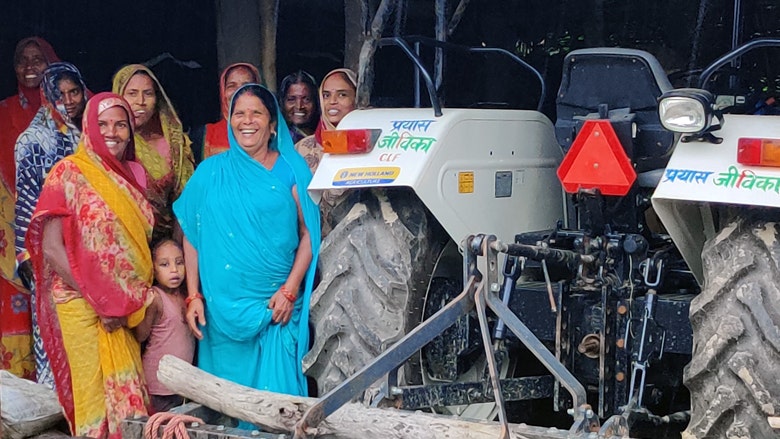
JEEViKA started as a World Bank-supported pilot and is now Bihar’s arm of the National Rural Livelihoods Mission. It works in layers. Ten to 15 women form a self-help group (SHG) that saves every week. Groups in a village join a village organisation, and village organisations join a cluster-level federation.
The figures released for the anniversary, as reported by Indian Masterminds, are:
- 13.06 lakh self-help groups
- 77,787 village organisations (gram sangathans)
- 1,683 cluster-level federations
- ₹76,549 crore in bank credit accessed through the network
- 6,771 Bank Sakhis, women who run banking points in villages
Not every report agrees. A Patna news report on the anniversary put the number of groups at about 11.85 lakh and bank loans at over ₹69,000 crore, with repayment of about 99%. The gap probably reflects different dates and whether inactive groups are counted, but JEEViKA has not published a single public dashboard that settles it.
What has changed: cheaper loans and a seat at the table
The strongest evidence is about debt. An evaluation of JEEViKA’s first phase compared 200 villages where it worked with 200 similar villages where it did not, using a 2011 household survey. Families in JEEViKA villages owed an average of ₹5,000 in high-cost loans, at 4% a month or more, against ₹14,500 in the other villages. Group credit cost about 24% a year, compared with 60–120% from moneylenders and shopkeepers.
The same study found women in JEEViKA villages were more likely to attend panchayat meetings, to give their opinion on their children’s education, and to say they would act to stop domestic violence. Those are small shifts in percentage points, but they are measured.
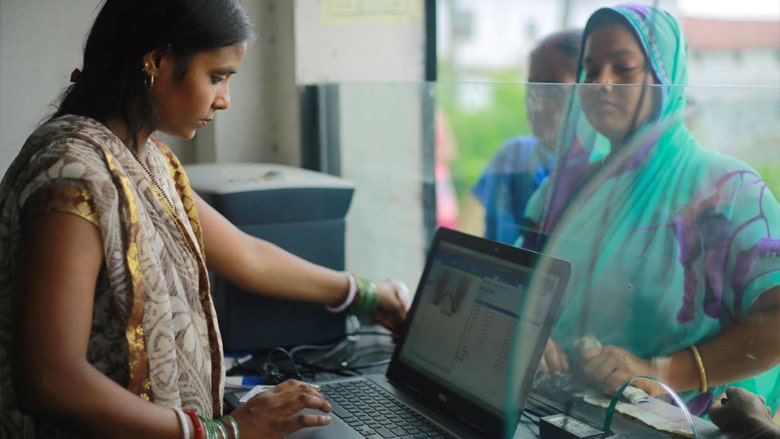
Banking has also moved closer to home. Babli Devi of Thakurganj block in Kishanganj joined a group in 2018 and became a Bank Sakhi in 2021, borrowing ₹30,000 to set up a customer service point. With fruit sales and tailoring, she now earns more than ₹1.5 lakh a year. In Arwal’s Kaler block, Bank Sakhi Anju Kumari handles transactions of over ₹2.5 lakh a day for her village.
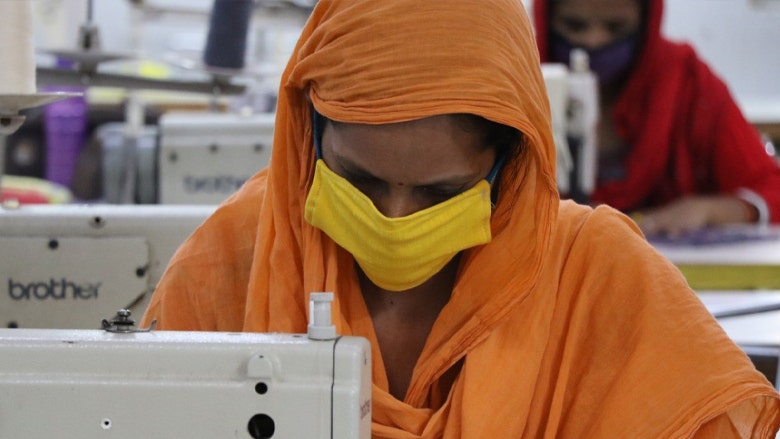
The network has also become the state’s delivery system in a crisis. During the first three months of the 2020 lockdown, JEEViKA women’s enterprises stitched 20.7 million face masks. Village organisations surveyed households and identified 2.4 million more families for ration cards. Its kitchens, branded Didi Ki Rasoi, now run in hospitals and government offices.
What is less clear: income
Here the evidence is thinner. The first-phase evaluation did not measure income or consumption at all. It found more mobile phones and cattle in member households, but no evidence that families had moved into new kinds of work.
The state’s current answer is the Lakhpati Didi campaign, which aims to help women earn at least ₹1 lakh a year. Bihar’s target is 94.71 lakh women by March 2029, and more than 50.40 lakh have been enrolled so far. Enrolment, though, is not the same as earning. The anniversary reports themselves list the problems: finding markets for group products, growing tiny businesses, and creating steady income rather than one-off loans.
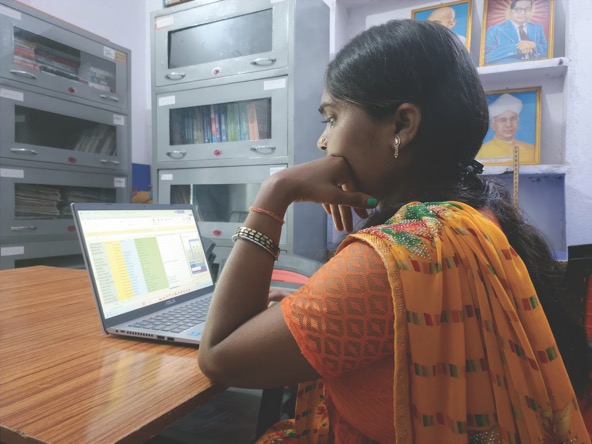
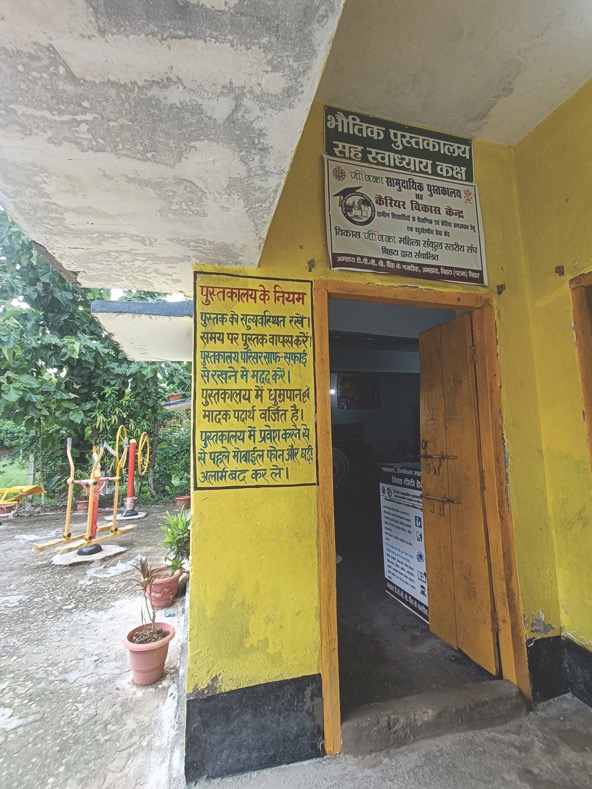
Some newer projects try to widen what the network does. JEEViKA’s Didi ki Library centres, first opened in February 2023, now number 117 across 33 districts. According to JEEViKA data reported by the Stanford Social Innovation Review, they had over 1.23 lakh registered members by October 2025, 61% of them women. “Students who come here now call me Vidya Didi,” Rina Kumari, 31, who runs the library in Kulharia village, Bhojpur, told the journal.
The Jeevika didis who keep it running
Behind the 13 lakh groups are about 1.5 lakh community cadres: bookkeepers, trainers and coordinators, most of them women, paid a monthly honorarium rather than a salary. In September 2024, the state mission ordered that this honorarium be cut by 20% every two years from June 2024, reaching zero by 2028, with village groups expected to pay instead. On 9 September 2024, cadres began an indefinite strike.
The union that led it, the Bihar Pradesh Jeevika Cadre Sangh, demanded appointment letters, a minimum ₹25,000 a month and social security. In June 2025, then Chief Minister Nitish Kumar announced that honorariums for about 1.40 lakh JEEViKA workers would be doubled. He also cut the interest rate on group loans above ₹3 lakh from 10% to 7%. A programme that depends on its cadres had, for months, been at odds with them.
Close to politics
JEEViKA’s reach has also made it politically valuable. In August 2025, weeks before the assembly election, the state launched the Mukhyamantri Mahila Rojgar Yojana. It gave ₹10,000 to one woman per family as seed money for a business, paid only through JEEViKA groups. By November 2025, more than one crore women had received it, Scroll reported. Opposition parties called it vote-buying and alleged some women were left out, which the ruling JD(U) denied. After the result, RJD leaders blamed their defeat partly on the scheme.
None of this means the money was wasted. But when one network becomes the main channel for state cash, the line between building women’s institutions and building a voter base gets harder to see.
What would make the next 20 years count
Three things would help most. First, a public, regularly updated dashboard of groups, credit, repayment and incomes, so claims can be checked. Second, an independent study of household income across members and non-members, the question the first evaluation could not answer. Third, a settled deal for the cadres, whose work holds the system together.
Responsibility sits with the Bihar Rural Development Department, which runs the Bihar Rural Livelihoods Promotion Society, and with the Union Ministry of Rural Development, which funds the national mission. The women of JEEViKA have already shown what cheap credit and a group can do. Amna Khatoon’s bangles prove the model can work. The test now is whether it works for the women who never make the anniversary brochure.
Frequently asked questions
What is JEEViKA?
JEEViKA is the Bihar government’s rural livelihoods programme, run by the Bihar Rural Livelihoods Promotion Society. It organises poor rural women into self-help groups that save, borrow from banks and start small businesses.
What is Lakhpati Didi?
A campaign to help self-help group women earn at least ₹1 lakh a year. Bihar’s target is 94.71 lakh women by March 2029.
Who are Jeevika didis?
The popular name for women in JEEViKA groups, and especially for the community cadres who keep books, train groups and work as bank agents for a monthly honorarium.
More from Third Eye: the voters Madhya Pradesh’s SIR left off the roll · all Third Eye reports · on IPB News: why stubble burning keeps coming back.
Sources: Indian Masterminds (20-year figures), 22Scope News, Ideas for India (first-phase evaluation), World Bank results brief, Stanford Social Innovation Review, AICCTU (cadre strike), Patna Press (honorarium), Scroll (₹10,000 scheme), The Tribune.